Fish run on schedule — tide, barometer, moon, water temp. Castline weighs all four and hands you one number, 0 to 100, seven days out. Fish the strong days. Sleep through the dead ones.

The scoring
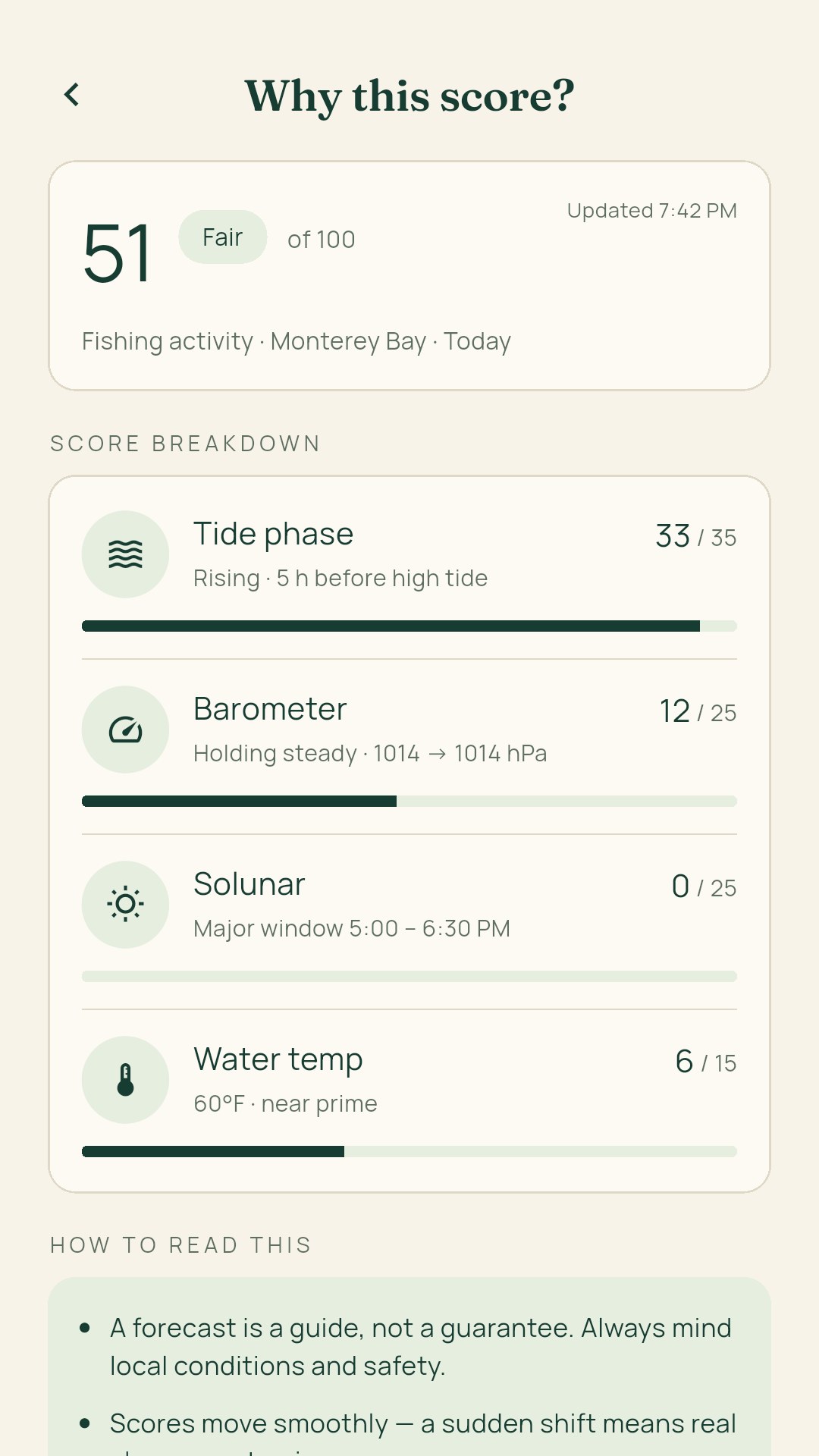
Castline scores every hour of the next seven days and shows its work. Tap any day and you see exactly what moved the number. No black box, no vibes.
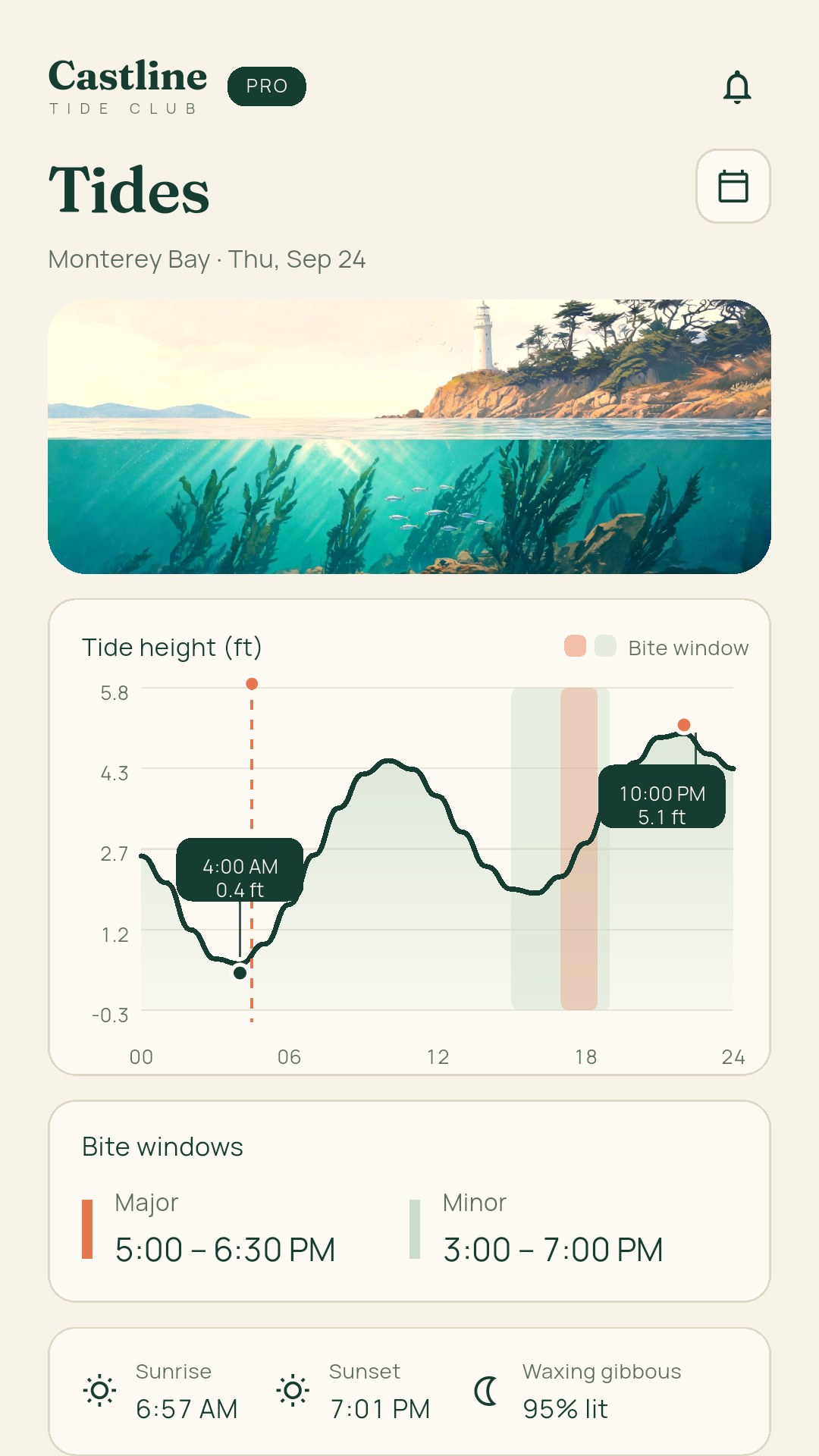
Slack water is nap time. The score peaks when the tide is actually moving — read hour by hour off the tide chart, from real NOAA station predictions, not guessed.
Fish feel a front before you do. A steady or slowly rising needle turns them on; a hard fall shuts it down.
Moon overhead, moon underfoot — the almanac's major and minor solunar windows, computed to the minute for your spot.
Sea temperature in the feeding range, and a breeze you can still cast in.
Screens
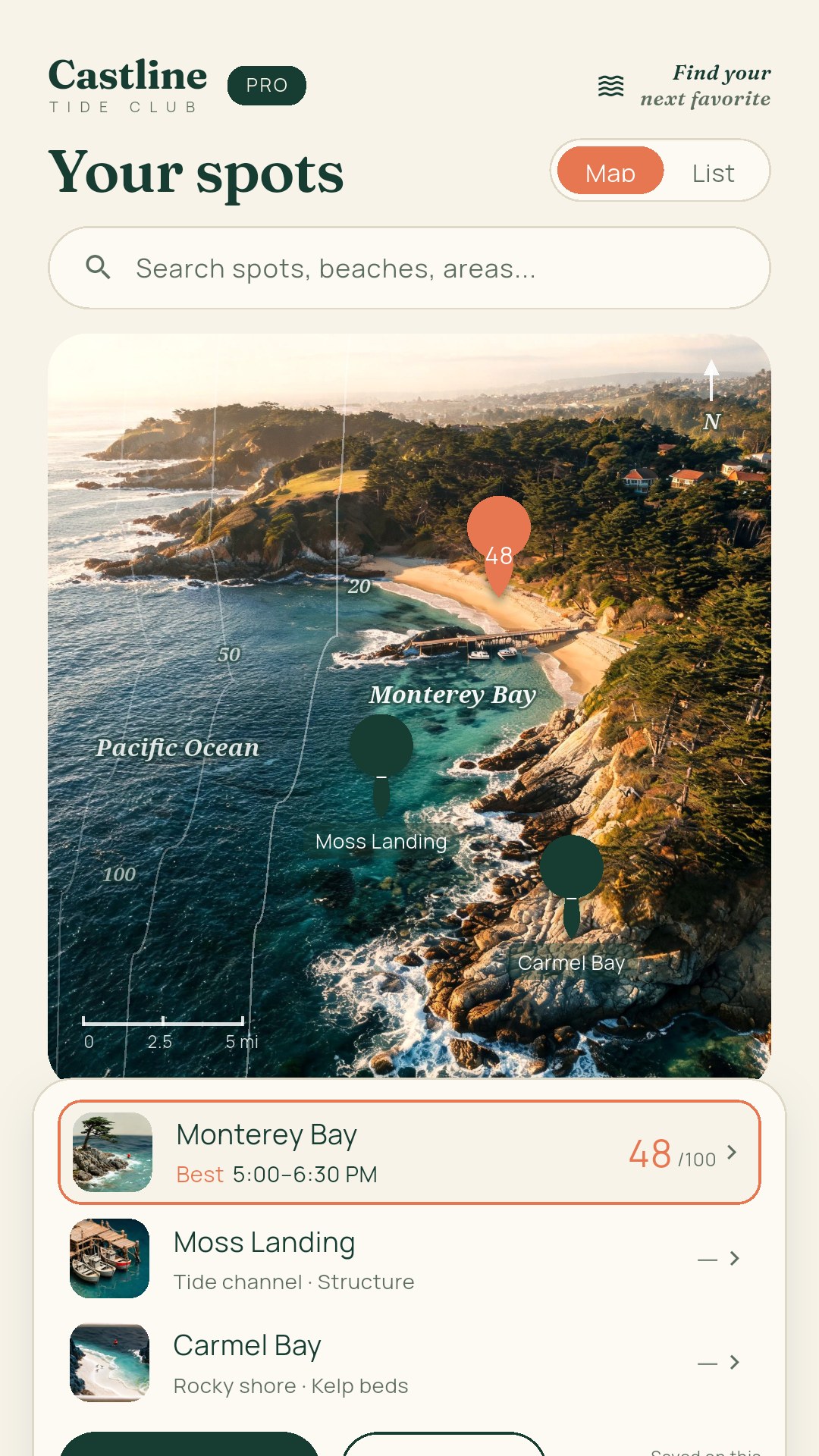
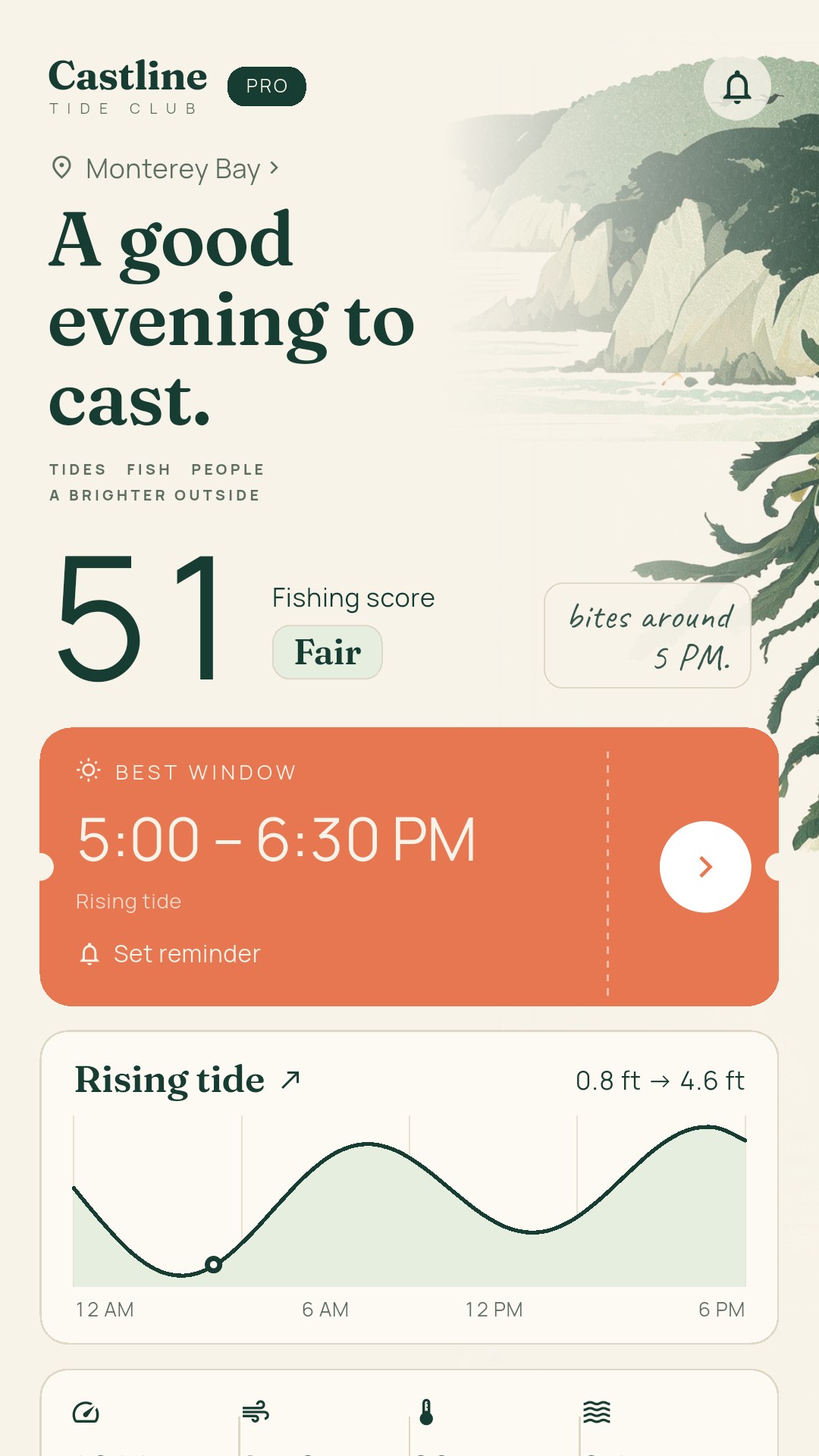
Tides, bite windows, spots and the reason behind every number. Built to be read in ten seconds at the ramp.


Monterey Bay, first light.
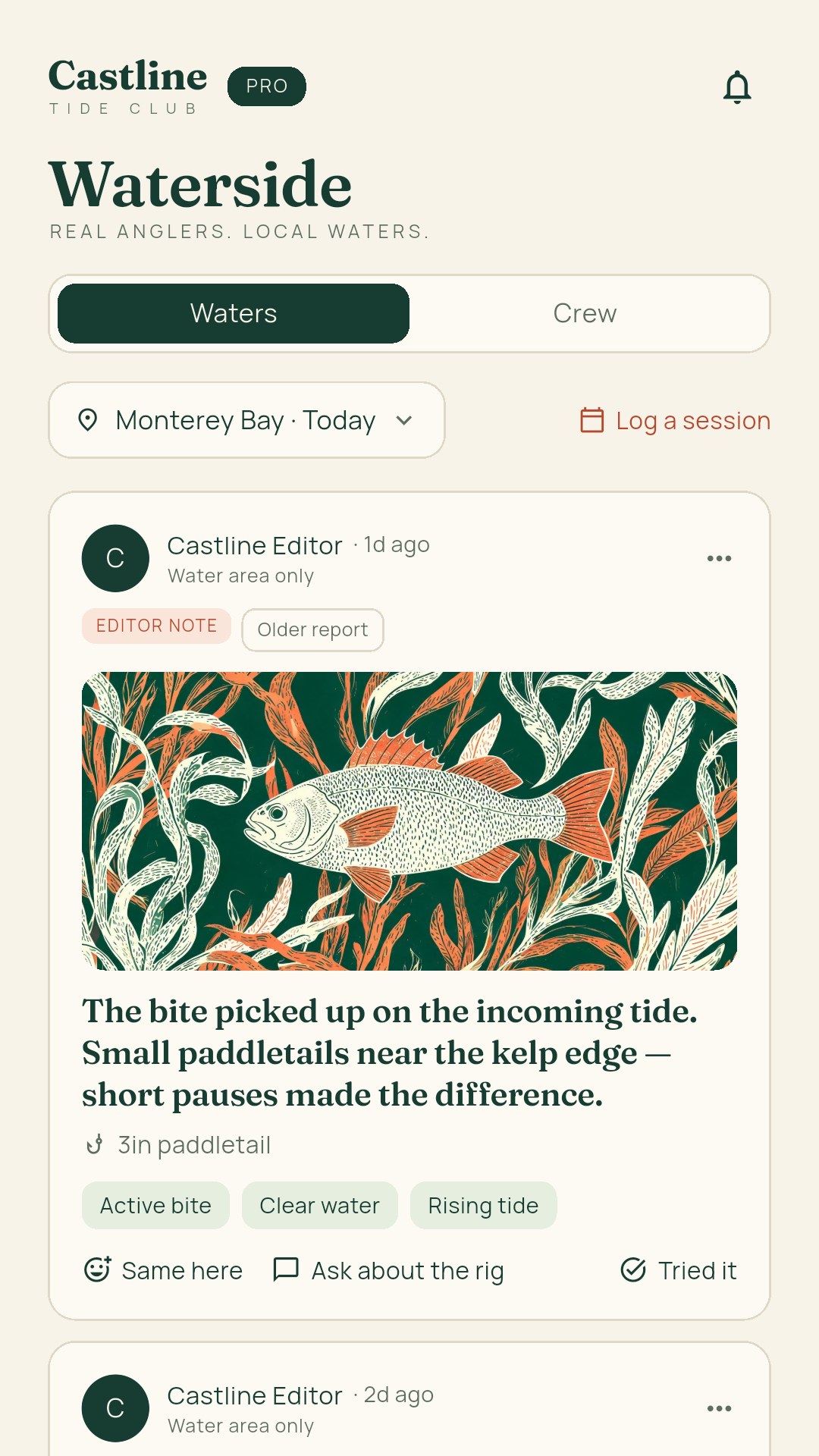
Waterside is the feed inside Castline — short fishing reports from anglers on the same water: what bit, on which tide, and whether the trip paid off. Tagged to the water, not to anybody's secret bank.

Every preset spot is backed by its own NOAA tide station — the same predictions posted on the board at the ramp. The engine already reads stations and harmonic tides for all three US coasts; more waters land as each one is verified.

Straight answers
Moving water and a stable barometer. Fish feed hardest around tide changes — the hour or two before a high or a low — and during the moon's major and minor solunar periods. Castline scores every hour of your day 0–100 on exactly those signals, and marks the best bite window right on the tide chart.
Fish feel a front before you do. A steady or slowly rising needle switches feeding on; a hard, fast fall ahead of a front can trigger a short flurry and then shut the bite down. Castline tracks pressure hour by hour and weights a quarter of the score to it.
The almanac's majors and minors. When the moon sits overhead or underfoot, feeding picks up — those are the majors. Moonrise and moonset give the shorter minors. Castline computes both to the minute for your spot and folds them into the score.
The moving water either side of a high or low, not the slack in between. Slack tide is nap time. Castline's score peaks when the tide is actually running, measured from real NOAA tide station predictions rather than guessed.
Yes. Your latest forecast and tide chart are cached on the phone, so at the ramp with no signal you still see the most recent score and windows. No account is needed for any of the forecasting.
Today's score, the tide chart, saved spots and the full score breakdown are free, with no ads pushed at them. Castline Pro unlocks the whole week as a scored fishing calendar — seven days of tides, bite windows and moon — at $5.99/month or $39.99/year after a 7-day free trial, cancelable anytime in Google Play.
Your honey hole stays yours.
The forecast side of Castline works with no account at all. Tide Club posting is the only thing that touches a server — and it can't carry your locations even by accident.
Short version: your logbook and saved spots live on your phone, full stop. Community posts are tagged to preset water names only — the app rejects anything that looks like a coordinate. No ads, no analytics, nothing sold. Delete your account in the app any time.
Read once on your device to find the nearest preset spot. Never transmitted to us, never stored.
Fetched by your phone straight from Open-Meteo and NOAA. The only data sent is the spot's coordinates.
Tagged to a water area, never to coordinates. The server rejects anything shaped like a latitude or longitude.
Internet, optional location, optional notifications. Nothing else — no analytics, no ad SDKs.
Tonight's tide is already scored. See where the window lands.
Castline on Google Play see you at first light